
The robot’s biggest advantage over any truck-based service is simple: it’s already at your house when the storm starts. Here’s the sequence.
1. The snow starts — so does the robot
Weather monitoring triggers autonomous clearing when snowfall begins. No phone call, no schedule to remember. (Schedules and manual runs exist in the app too, but storm response is the default behavior.)
2. It clears in passes, not all at once
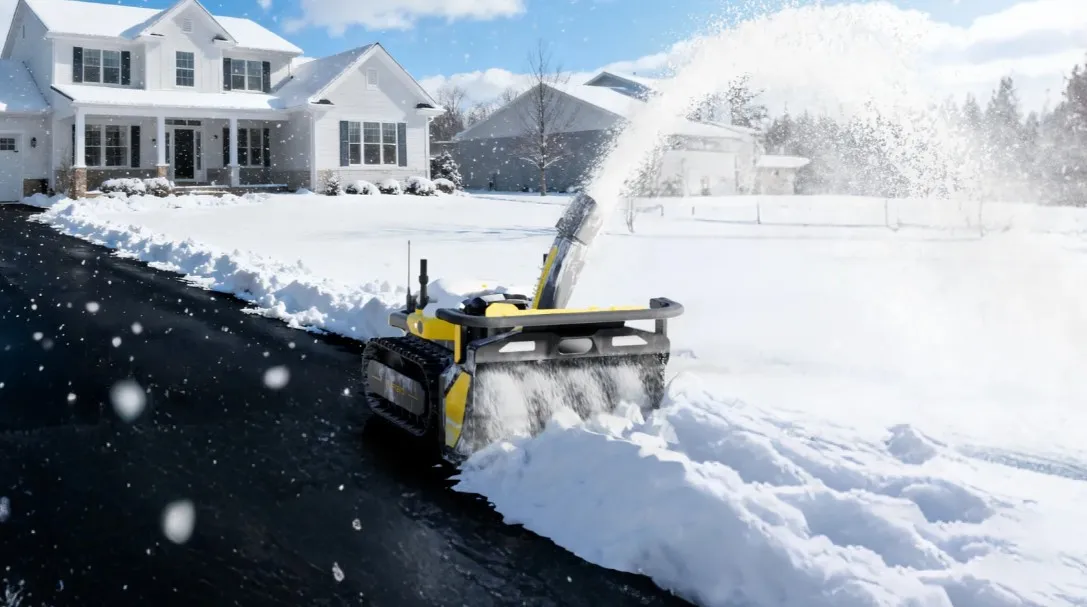
The two-stage auger-and-impeller intake handles up to 12 inches of snow per pass across a 24-inch clearing width. In a big storm the robot doesn’t wait for the ending — it cycles its mapped route repeatedly as accumulation builds, so it never faces more snow than it can chew. Thin, frequent passes also mean less compacted snow and less hardpack.
3. It refuels itself
Around 20% battery, the robot returns to its dock, fast-charges (about 1.5 hours to full by Yarbo’s specs), and heads back out to resume clearing — typically leaving the dock again around 80%. Overnight storms are handled in shifts, cold included.
4. Morning
The driveway’s black, the walks are clear, and the snow is distributed across the yard instead of piled at the end of the drive. The only evidence is track marks.
Wondering if your driveway qualifies? Find out in about two minutes.